
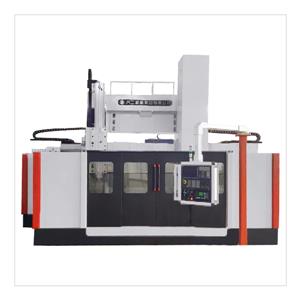
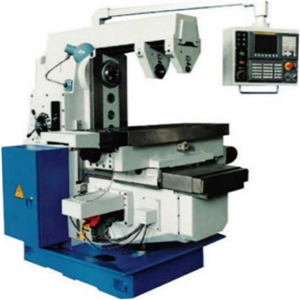
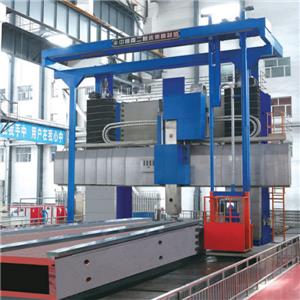
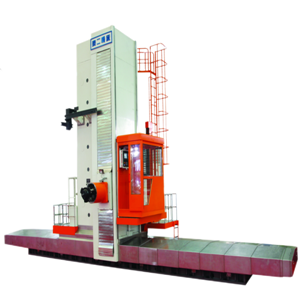
When Do You Need a CNC Vertical Turret Lathe?
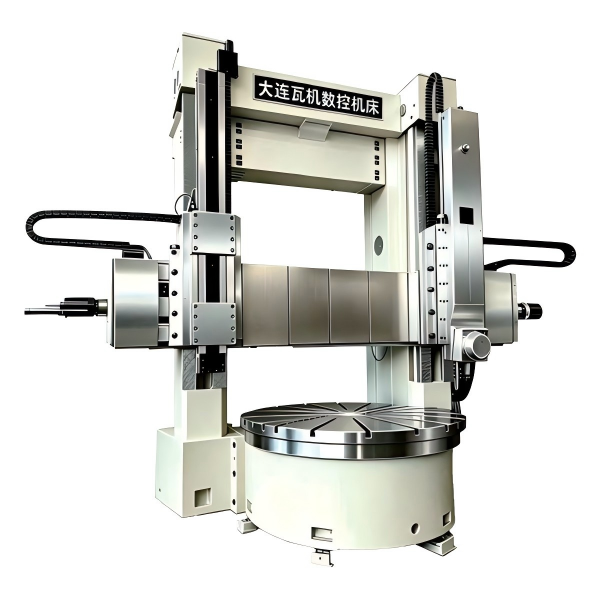
If the workpiece is mainly turning rotating surfaces such as outer circles, inner holes, and end faces, ordinary CNC vertical lathes can meet the processing needs. However, when in addition to turning, the workpiece also needs to complete the processing of holes, grooves, indexing, etc. in the same clamping state, and it is hoped to reduce secondary clamping and process conversions, CNC vertical turret lathe is more worth considering. For large and heavy-duty rotary parts, the value of the C-axis configuration is mainly reflected in process integration rather than simply adding equipment functions.
The Workpiece Not Only Needs Turning, But Also Needs Subsequent Processing.
Ordinary CNC vertical lathes mainly complete rotary processing, such as:
· Machining outer and inner circles
· End machining
· Step and contour processing
If the workpiece needs to be processed for holes, grooves, or other machining related to circumferential position after turning, it may be necessary to transfer the workpiece to another equipment for repositioning.
CNC vertical turret lathe can combine workpiece rotational positioning with other processing functions depending on the specific configuration, thereby reducing the transfer of workpieces between different equipment. Therefore, for the composite process of "turning + other processing", the value of the C-axis will be more obvious.
The Workpiece Requires Circumferential Positioning or Indexing.
Another important role of the C-axis is to allow the workbench to be angularly positioned according to the machining program. For example, large flanges, gear blanks, bearing parts or pressure vessel parts may also involve machining holes, grooves or other features in the circumferential direction after turning.
The common feature of this kind of workpiece is that the machining position is not only related to the size in the X and Z directions, but also related to the position of the workpiece in the circumferential direction. If each process needs to be re-clamped and re-aligned, it will not only increase the auxiliary time, but also increase the processing risk caused by re-positioning.
Therefore, when buyers find that their workpieces have more circumferential distribution characteristics, they should further evaluate whether the C-axis configuration is necessary.
The Workpiece Is Large in Size and Heavy in Weight, And Frequent Re-Clamping Is Not Desired.
For large rotary parts, re-clamping is often more troublesome than for small parts. Large flanges, steam turbine components, bearings, and pressure vessel components may themselves have large diameters and weights. DALIAN WAJI CNC MACHINE CO., LTD's D series double-column vertical lathe models have a maximum turning diameter covering approximately Φ2500-Φ4000 mm, and a maximum workpiece weight of 12 - 32 tons depending on the model.
For such workpieces, if they need to be transported to another equipment for secondary processing after turning is completed, lifting, positioning and alignment need to be considered again. Therefore, if the project also has large/heavy workpieces + multi-process processing + high secondary clamping costs, then CNC vertical turret lathe has higher evaluation value.
We Hope to Reduce Process Conversions Rather Than Simply Pursuing Larger Equipment.
Purchasing C-axis equipment does not mean "the more functions the better". If your product is only subjected to routine turning and the machining process is simple, there is no need to add equipment configuration to the C-axis.
A more reasonable way to judge is to see: Can the C-axis really reduce your processing operations?
If the addition of the C-axis allows the workpiece to complete more processing tasks in one clamping, it can help reduce workpiece transfer, realignment, and process connection between multiple devices. On the contrary, if the entire processing process is always only turning, then ordinary CNC vertical lathes may be enough.
Which Workpieces Are More Worth Considering with a C-Axis?
From the perspective of processing characteristics, the following types can be focused on:
| Workpiece Characteristics | Is an Evaluation of the C-Axis Recommended? |
| Machining limited to outer diameters, inner bores, and end faces | Usually not required |
| Large rotary component; primarily turning operations | Depends on process requirements |
| Post-turning operations (e.g., holes, grooves) required | Priority evaluation recommended |
| Multiple machining locations along the circumference | Priority evaluation recommended |
| Heavy workpiece; difficult to re-clamp | Evaluation recommended |
| Desire to minimize transport and re-alignment | Evaluation recommended |
| All machining steps consist of simple turning | C-axis value is relatively limited |
What Else Need to Be Confirmed Before Purchasing CNC Vertical Turret Lathe?
Don't decide the equipment model based solely on "whether a C-axis is needed". A more reliable selection method is to first sort out the actual processing conditions of the workpiece, including:
· Maximum and minimum workpiece diameters
· Height of workpiece
· Weight of workpiece
· Materials and hardness
· Processing allowance
· Whether there is intermittent cutting
· Holes, grooves and other features to be machined
· Annual processing volume
· Target machining accuracy
As a supplier with more than 20 years of production experience, we recommend that buyers start from the workpiece parameters and then judge whether the standard configuration is sufficient and whether further configuration of the C-axis, driving tools or measurement functions is needed.
Conclusion: When Is the C-Axis Really Needed?
When your large rotary workpiece is no longer just "turning", but requires circumferential positioning, hole and groove machining or other compound machining, and the cost and risk of secondary clamping are high, it is worth considering CNC vertical turret lathe.
If the workpiece is always dominated by simple turning, the C-axis is not necessary. The most reasonable way for a buyer is not to first determine "I want a C-axis equipment," but to first provide the workpiece size, weight, materials, processing drawings and specific processing procedures, and then let the equipment manufacturer judge whether the C-axis and other functions are really necessary based on the actual process.